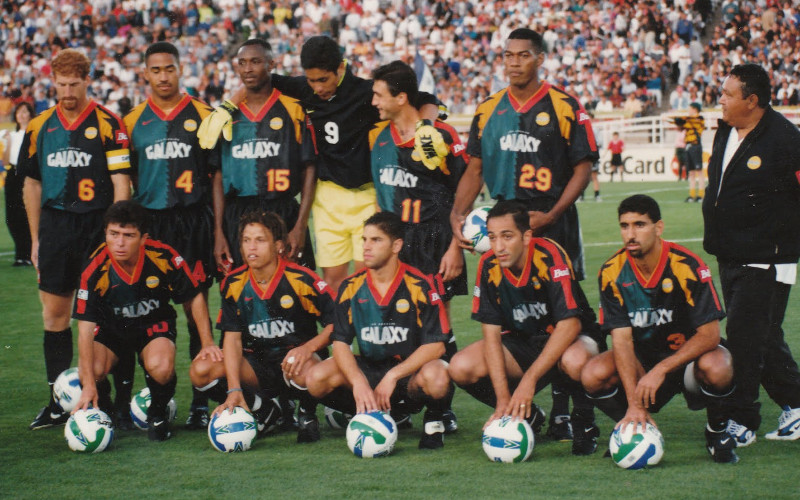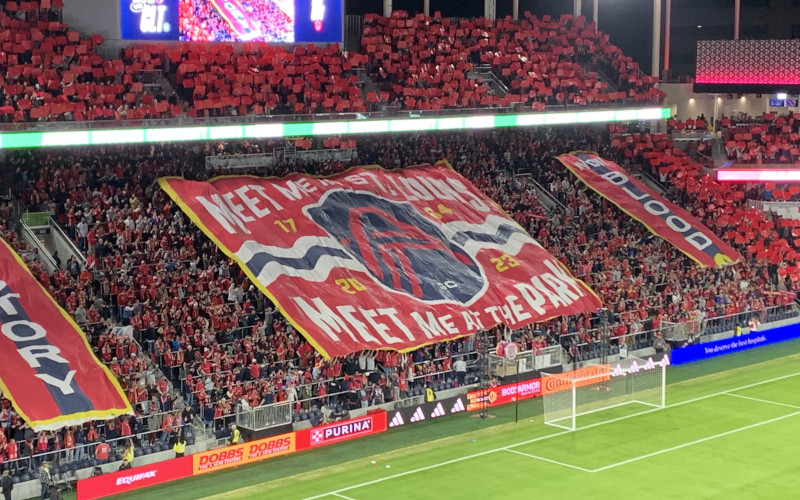
There are now 30 MLS teams competing in the two conferences that make up Major League Soccer, but back when the league began, it was very different.
The MLS journey started with just ten teams – that’s only five in each conference. It was a totally different dynamic back then, with a completely different playoff structure, shootouts settling tied results even in regular season games, and almost no soccer specific stadiums.
Some of the teams that were there for that very first season don’t even exist any more, but plenty more have come to take their place.
This page is about those teams.
Major League Soccer would be nothing without the clubs that play in it, and each one has its own story to tell. From San Jose Clash who moved 3,000km East and rebranded as Houston Dynamo before rising again under their original name, to the likes of Inter Miami which was put together by a group of superstar investors and coaxed the world’s greatest player (at the time) to join them.
Team Names and Identity

An odd quirk of Major League Soccer compared to many other soccer leagues, is the team names.
In countries where football has long been the national sport, like England, teams are usually named very simply: Location FC/United/Rovers/Wanderers/City/Town. In the US, sports teams have historically had more characterful names, and this trend continued when MLS first launched.
We had Tampa Bay Mutiny, San Jose Clash, Kansas City Wizards, the MetroStars, etc. There was also a bit of European influence in there such as DC United (United is very common for clubs in England), and Real Salt Lake adding a Spanish influence when they joined in 2005, borrowing the ‘Real’ from Real Madrid. The number of expansion teams choosing to use ‘FC’ as part of their name was interesting too, given it stands for ‘Football Club’, and the US refer to the sport as ‘soccer’.
Then came something else very American – corporate ownership when Red Bull GmbH bought the MetroStars and rebranded them as the New York Red Bulls.
Over time, that characterful approach to naming teams has died off, as the league and the clubs within it have moved to be more in line with the rest of the global football world. A couple of teams even opted for SC instead of FC: Nashville SC and Orlando City SC. Some teams went as far as rebrandeding to more traditional sounding names, like Montréal Impact becoming CF Montréal and Dallas Burn becoming FC Dallas, but some of the fun names remain. This makes MLS feel unique, with it’s odd mix of European, English, Corporate, and US style team names, and gives the league real personality.
It bleeds into the identity of each club too. Most clubs were brand new when they joined, so they also needed to create their identities from scratch. The name was a big part of this, but so were the colours they would wear, and the design of their club crests or badges. If you look into the story of each club’s badge you will see a lot more than first meets the eye.
The Story of MLS Expansion Teams

Expansion has been key to the growth of Major League Soccer. Not just in terms of the league literally expanding in size, but in terms of its increasing popularity both domestically and abroad.
The league has gone through several distinct periods of expansion (and contraction), and this shows in the huge amounts of money it now costs to join the league as an expansion team. Real Salt Lake paid just $7.5 million as an MLS expansion team in 2005. In 2013, New York City FC paid $100 million. Just ten years later in 2023, San Diego FC paid $500 million.
You can break these down into roughly five time periods:
- 1996 to 2001: Founding and survival
- 2002 to 2006: Post-contraction rebuild
- 2007 to 2014: Designated player introduction
- 2015 to 2019: Modernisation and identity
- 2020 to Now: Global visibility and commercial scale
This goes some way to explaining why some clubs feel like journeymen teams and others feel like absolute ballers. A team founded in the early 2000s was far more likely to have been owned by a single businessman, probably local, because it was 50 times cheaper back then. Newer clubs need a pool of investors, there are often some famous names among them, and so they have more cash to throw around.
There is more prize money and sponsorship money around these days too. So newer clubs have more chance of starting well, while those 30 year veterans that have done all the leg work can feel left behind.
Every Club in MLS and their Story

This is a list of every club currently playing in Major League soccer, organised alphabetically and by conference. I have also included a section for the team that folded around the period when the league contracted before expanding again.
Eastern Conference
- Atlanta United FC
- Charlotte FC
- Chicago Fire FC
- FC Cincinnati
- Columbus Crew
- D.C. United
- Inter Miami CF
- CF Montréal
- Nashville SC
- New England Revolution
- New York City FC
- New York Red Bulls
- Orlando City SC
- Philadelphia Union
- Toronto FC
Western Conference
- Austin FC
- Colorado Rapids
- FC Dallas
- Houston Dynamo FC
- LA Galaxy
- Los Angeles FC
- Minnesota United FC
- Portland Timbers
- Real Salt Lake
- San Diego FC
- San Jose Earthquakes
- Seattle Sounders FC
- Sporting Kansas City
- St. Louis City SC
- Vancouver Whitecaps FC
Defunct Teams
We lost a few teams along the way, sadly, but they have stories too.
- Tampa Bay Mutiny
- Miami Fusion
- Chivas USA
All Teams Have Something in Common

While it’s true that every MLS team has its own unique story, there is one thing that each team has in common: they are all owned by Major League Soccer.
Unlike every other soccer league in the world, MLS teams are franchises of the league rather than fully independent entities. The reason expansion teams have to pay to join the league, is because they are effectively buying their way into a massive existing business.
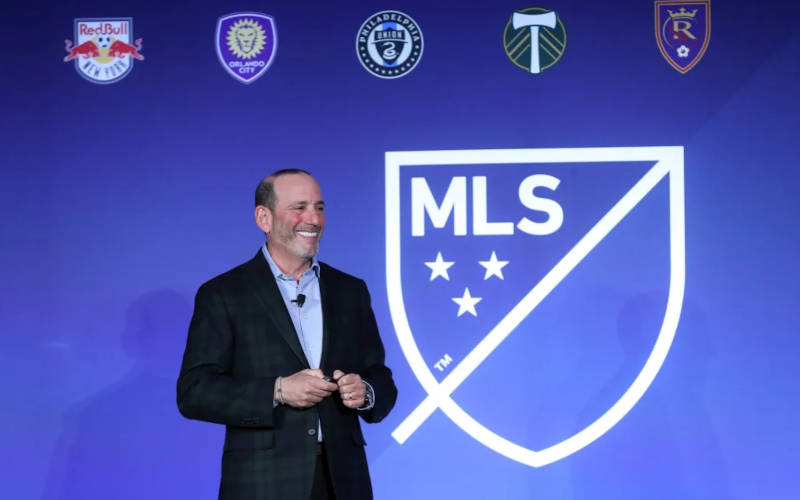
MLS runs on a single entity model, which means everything is centrally controlled. Each club has a voice at the table, so when big decisions are made they all come together to discuss and, if necessary, vote on what to do. The MLS Commissioner, currently Don Garber, oversees everything, but he is employed by MLS, he doesn’t own it. The club owners all have a say in the decisions he makes.
However, each club is still run independently, handling their own merchandise, ticket sales, sponsorships, even owning their own stadiums in many cases, but they are part of something bigger. This is why some teams can still do so much better than others financially.
MLS is set up in this centralised way to reduce the risk of teams financially collapsing and damaging the league as a whole. This has been the downfall of previous failed professional soccer leagues in the US. If MLS has overall control, they can manage spending, regulate contracts, and step in when necessary to protect the long-term stability of the competition.
So each team still has autonomy and its own identity, even though they are all technically owned by MLS itself.